



Norwegian lobster
It is a fully fledged crustacean that lives on the ocean floor from North Africa to Norway and Iceland in the northeast of the North Atlantic and the Mediterranean. Small in size, easily recognizable due to its slender claws and almost equal length to the body. Cave dwelling in the soft seabed at a depth of about 10 to 250 meters, with many spinous processes and no large claws. Active at night, hidden in rock crevices during the day. Eating dead or fresh fish, shrimp, shellfish, echinoderms, polychaetes, seaweed, etc., with a large appetite and strong hunger tolerance. In the case of artificial breeding, there may be a habit of cannibalism. Due to its lower price compared to typical European lobsters, Norwegian lobsters are consumed in Spain, Portugal, and other places.

Elephant skeleton
Elephantidae is a mammal belonging to the family Elephantidae in the order Longnose, consisting of two genera, and is the largest terrestrial animal in the world. Its pillar like limbs and wide feet can stably support its massive body. A huge head with fan-shaped large ears and a long and elastic nose. Elephant ears have abundant blood vessels that can effectively dissipate heat. The elephant trunk, which combines the nose and upper lip, is coordinated by over 15000 muscles. Distributed in sub Saharan Africa and southeastern Asia, it inhabits various living environments, especially forests, grasslands, and river valleys. Living in groups, male beasts occasionally live alone. Eating plants, with a large appetite.

Camel skull
Camel deer is a mammal of the camel genus in the family Camelidae of the order Artiodactyla. Camel deer have a larger body size, generally ranging from 2-2.6 meters in length. The body resembles a camel, with four long legs similar to a camel. The shoulders are high, the head is large, the eyes are small, the face is long, the neck is short, the nose is enlarged and slightly drooping, and the upper lip is 5-6 centimeters longer than the lower lip. The hair color of the whole body is brown, the nose is thickened, and there is a chin pouch under the throat. Named after the hump shaped back hump and the horn shaped lower jaw. Typical subarctic coniferous forest animals, wandering in groups in the forest clearing, like to eat tender branches of plants, move quickly and agilely, and can run quickly. Long legs, able to walk freely even in thick snow

Tiger skull
Tigers belong to the feline carnivore family and hunt a variety of animals for food. They are usually accustomed to hunting from dawn to sunset and mainly feed on large mammals. It can hunt prey larger than its own size, and a tiger weighing 250 kilograms can hunt an Indian bison weighing 900 kilograms. Tigers in the wild can eat up to 40 kilograms of meat at a time. Without disturbance, they usually return to the hunting site within three to six days after catching prey to enjoy the remaining food until there is little left. The difference between tigers and other cats is that they are good at swimming.

Double horned hornbill skull
The double horned hornbill is a bird species belonging to the family Rhinocerotidae in the order Nymphalidae, also known as the Great Rhinoceros, the Great billed Sparrow, the Robby, and the Vajra. It is distributed in India, Bangladesh, Indochina Peninsula, western Indonesia and other places. In China, it is mainly distributed in the west and southwest of Yunnan and southeast of Xizang. Residing in evergreen broad-leaved forests in low mountains and foothills below an altitude of 1500 meters. Mainly feeds on fruits and seeds of various tropical plants, as well as animal food such as large insects, reptiles, and rodents. During the season when the fruits are ripe, hornbill flocks mostly stay in one place to feed until they run out of food before switching to a new feeding location.

Sea Lion Skull
Sea lions are a collective term for carnivorous mammals in the sea lion family; There are a total of 5 genera and 14 species. Round head, fin shaped limbs as flexible as wings, and hind limbs that can turn backwards. Most sea lions have thick short fur on their bodies, with a thin layer of fluff underneath. However, the fur color of various sea lions is not consistent, mainly yellow brown and brown. Has a distinct tail, but is relatively short. Some species have long hair on their necks, similar to the mane of a lion, hence the name sea lion. He is known as the 'Lion King of the Sea'. Can dive to a depth of over 300 meters. At the same time, sea lions are also very intelligent sea beasts.

Chimpanzee skull
Chimpanzees are primates in the family Homo, belonging to the genus Chimpanzees. The body is bloated, with long arms, short legs, and no tail. The surface of the body is mostly covered with black long hair, but the face, ears, fingers, and toes are exposed and hairless, mainly distributed in central and western Africa. They inhabit tropical rainforests and moist savannas, living in clusters of more than 2-20 individuals per group, led by one adult male. They have a large appetite and enjoy eating fruits, leaves, roots, flowers, seeds, and bark, while some individuals often eat smaller animals. It is rare to live beyond 40 years old in the wild, but in captivity, one can live to over 60 years old.

Popular Models
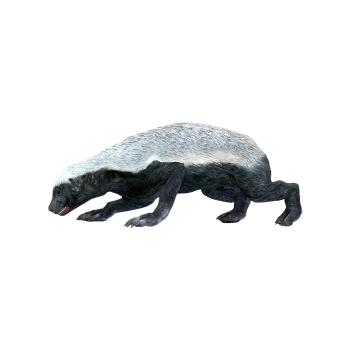
Honey Badger (3D animated model)
194 View
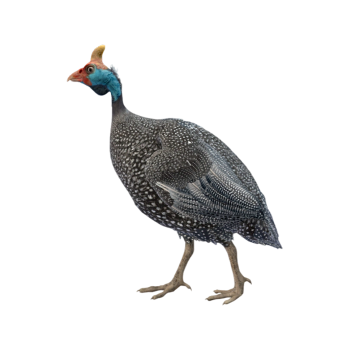
Guinea fowl (3D animated model)
165 View
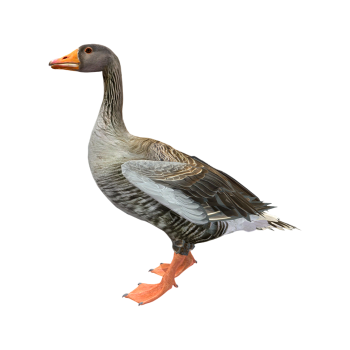
Wild Goose (3D animated model)
187 View
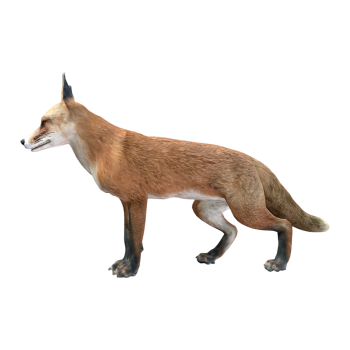
Red Fox (3D animated model)
155 View
Random Model

Transformers Optimus Prime
1710 View

chameleon
1284 View

Ice hockey goalkeeper stick
1042 View


Caterpillar 785D Mining Truck
832 View

Toyota Sequoia 2023
872 View

a pile of sacks
527 View

Rhinoceros 3D Animation Model
953 View

Cut watermelon
279 View

Great Fortune "gourd shaped plaque
1206 View